
History note
Teen Patti vs Three Card Brag: history, deal and rule differences
The games are related in many reference accounts, but a shared three-card ancestry does not make their table procedures identical.
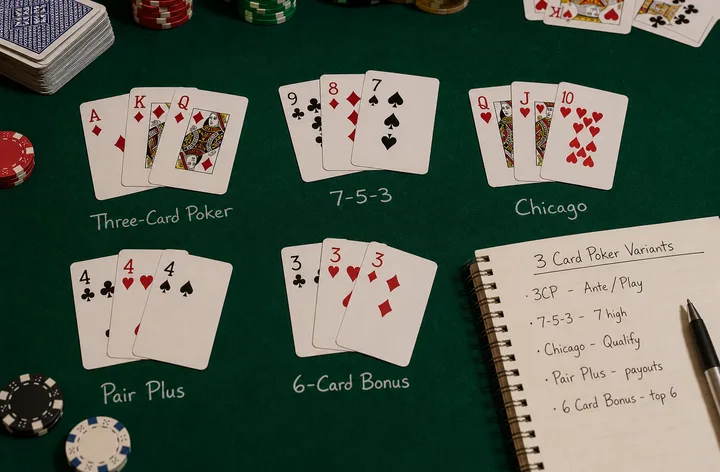
Direct answer: Teen Patti is widely described as related to the British game Three Card Brag, then developed its own South Asian vocabulary and table customs. Modern Teen Patti uses terms such as blind, seen, chaal, pack, side show and show; Brag references use their own betting and comparison procedure.
What can be stated carefully
| Evidence point | Careful reading |
|---|---|
| Three cards | Both games compare compact three-card hands. |
| Historical relationship | Reference works describe Teen Patti as influenced by or related to Three Card Brag; they do not prove one exact invention date. |
| Vocabulary | Teen Patti's blind/seen, chaal and side-show language reflects its own table culture. |
| Current play | House rules decide sequence order, ties and request costs. |
Do not merge the rulebooks
A familiar name such as pair or sequence can hide a different category order or betting procedure. At an adult friends table, write down the six Teen Patti hand categories and the A-K-Q/A-2-3 convention before the first deal.
Tradition without an origin myth
Teen Patti is strongly associated with India and South Asia, including festival gatherings, but available public summaries have citation limitations. Treat the relationship as documented context rather than claiming a precise ancient origin.
Sources
Background checked against Wikipedia's Teen Patti overview and Pagat's rule record. The Wikipedia article itself flags citation gaps, which is why this page avoids a precise origin date.